
what’s she reading?
books as character clues in film and tv

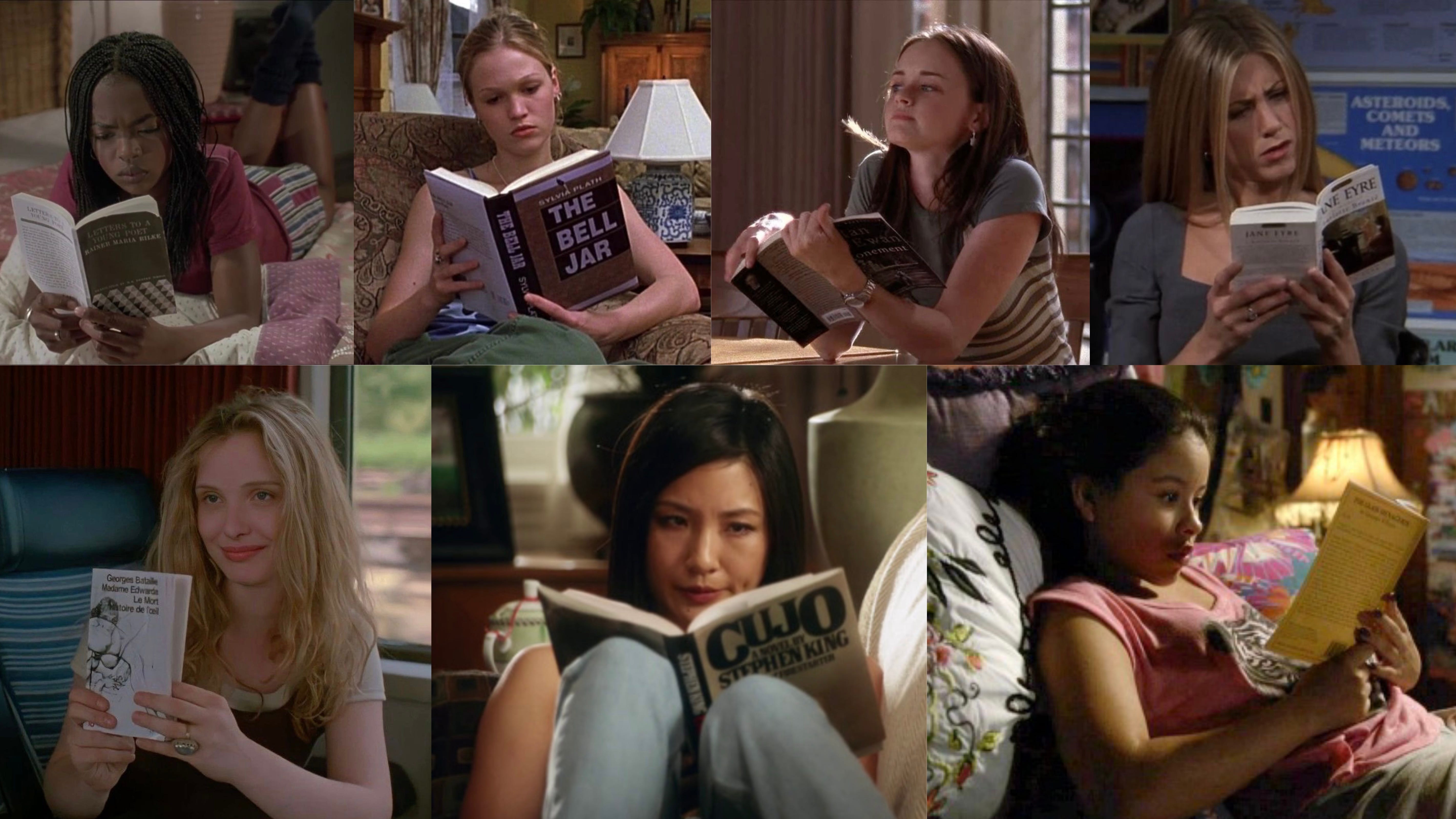
a few months ago i did a post on ig where i shared what some female characters were reading in films and tv shows. i’ve always liked that way of building a character, through small, almost background details that don’t seem like much at first, but end up saying a lot more than they look like they’re saying.
books in particular feel like one of those details. they’re not always there to tell you something directly, sometimes they just sit in the frame for a second, or get mentioned once (but even then, they add a layer) they can change how you read a character, or quietly point to what they’re drawn to, how they think, or what they’re trying to figure out without saying it out loud.
so i wanted to revisit it properly, and actually look at what these books are, what they’re about, and why they make sense for the characters holding them (not as symbolism just as telling choices)
so here’s the little compilation i made:
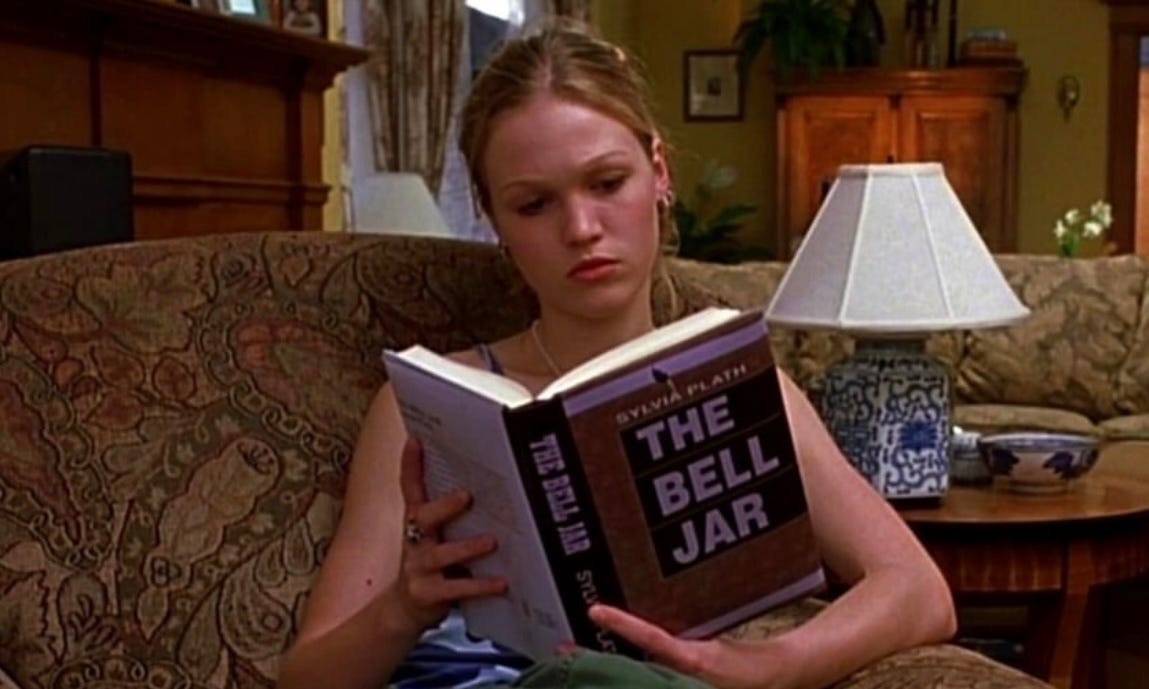
kat in 10 things i hate about you (the bell jar by sylvia plath)
this novel follows a young woman who feels increasingly out of step with the world around her (especially the expectations placed on her) it’s about alienation, pressure to conform, and the internal experience of watching life feel slightly removed from you rather than fully lived inside it.
kat moves through 10 things i hate about you with a similar kind of awareness. she’s not trying to fit into the social structure around her, and she’s very conscious of that distance. it’s less about rebelling and more about not wanting to play a role that doesn’t feel true to her. the bell jar sits in that same emotional space, less about being misunderstood, and more about noticing the gap between yourself and what’s expected (just not fully participating, because it doesn’t feel real enough to)
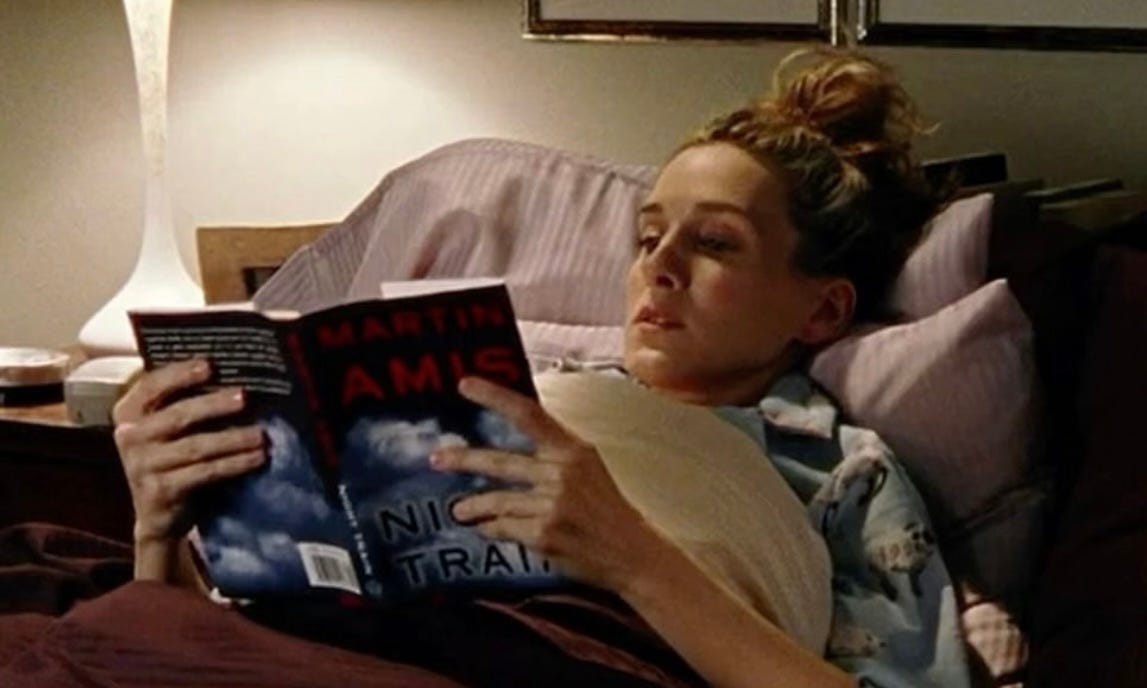
carrie in sex and the city (night train by martin amis)
this book moves through relationships with a kind of emotional distance, always observing and questioning what’s happening instead of completely giving in to it. it’s less about romance as something immersive and more about romance as something observed, analyzed, and narrated while it’s unfolding.
carrie kind of moves like this too. she’s fully in her relationships while they’re happening, but at the same time she’s already translating them into words, into her column, into something she can step back and make sense of. there’s always that slight distance, like she’s experiencing it and observing it at the same time. night train reflects that split, where experience is never just experience, it’s also interpretation happening in real time (like she’s in it but she’s also already telling you about it)
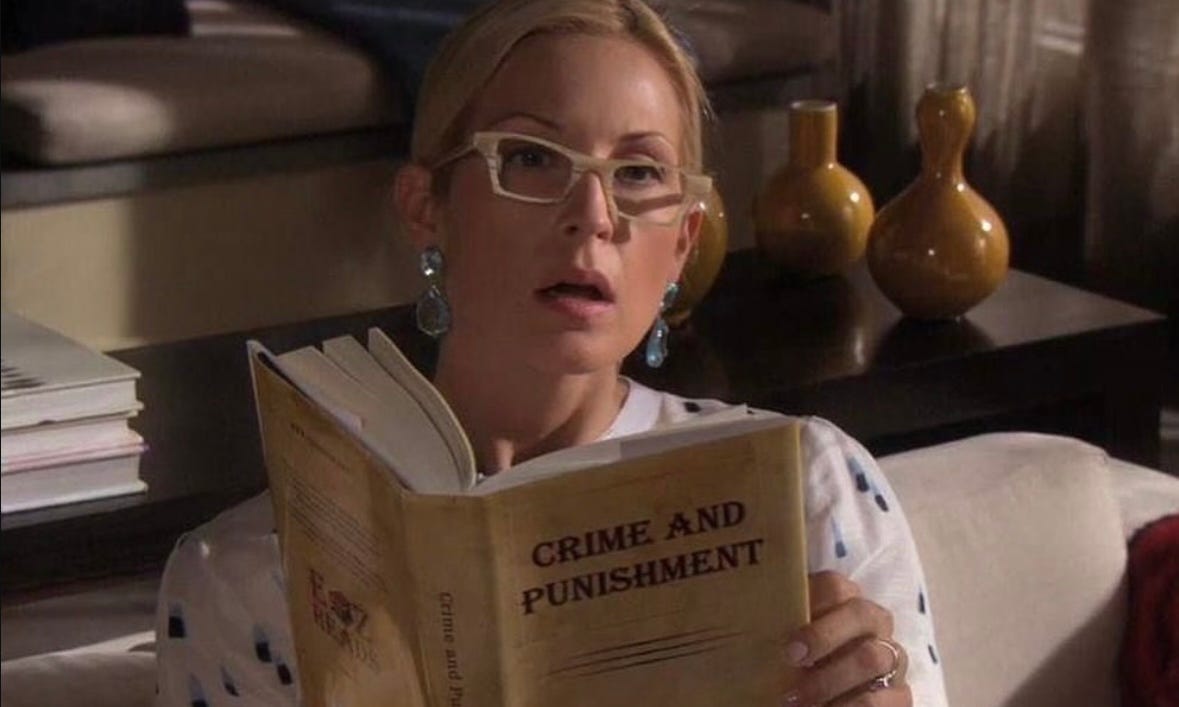
lily in gossip girl (crime and punishment by fyodor dostoevsky)
this novel is about guilt that doesn’t really go away, even when you try to explain it to yourself or move on from it. it follows what it feels like to live with something you can’t fully make sense of, and how that weight stays with you, even when everything around you seems to have changed.
lily lives in a world where things can be reset pretty easily, new relationships, new environments, a slightly different version of herself depending on what’s needed. on the outside, everything tends to move on fast, like nothing really sticks for too long. but crime and punishment focuses on the opposite of that. it stays with what doesn’t pass, the internal weight that lingers even when everything looks fine again. it’s less about what changes and more about what doesn’t, even after you’ve moved on (you can move forward but not always feel like you did)
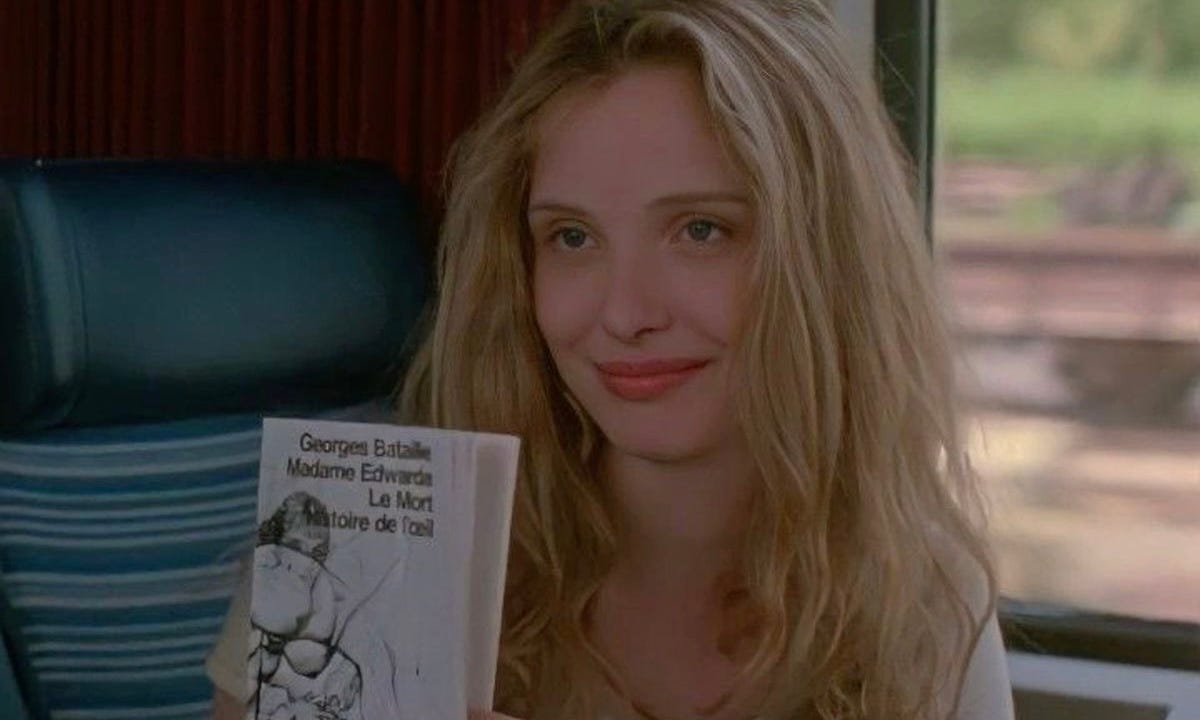
céline in before sunrise (madame edwarda / le mort / histoire de l’œil by georges bataille)
these works by bataille revolve around desire, intimacy, and the more extreme edges of human experience, where emotion, body, and thought don’t really stay in separate categories. they’re philosophical, but also deliberately unsettling, often pushing into territory that feels raw or uncomfortable rather than traditionally romantic.
céline in before sunrise moves through connection in a similar way, just more by talking things out than actually trying to get anywhere. she’s curious about people, about love, about what it really means to get to know someone (and she doesn’t really do surface level anything) she keeps questioning things as they’re happening, lets moments stay a bit unresolved, and seems way more interested in going deeper than in keeping things comfortable. bataille sits in that same space, where curiosity isn’t soft or romantic, but something that can get intense, a bit contradictory, and very human.
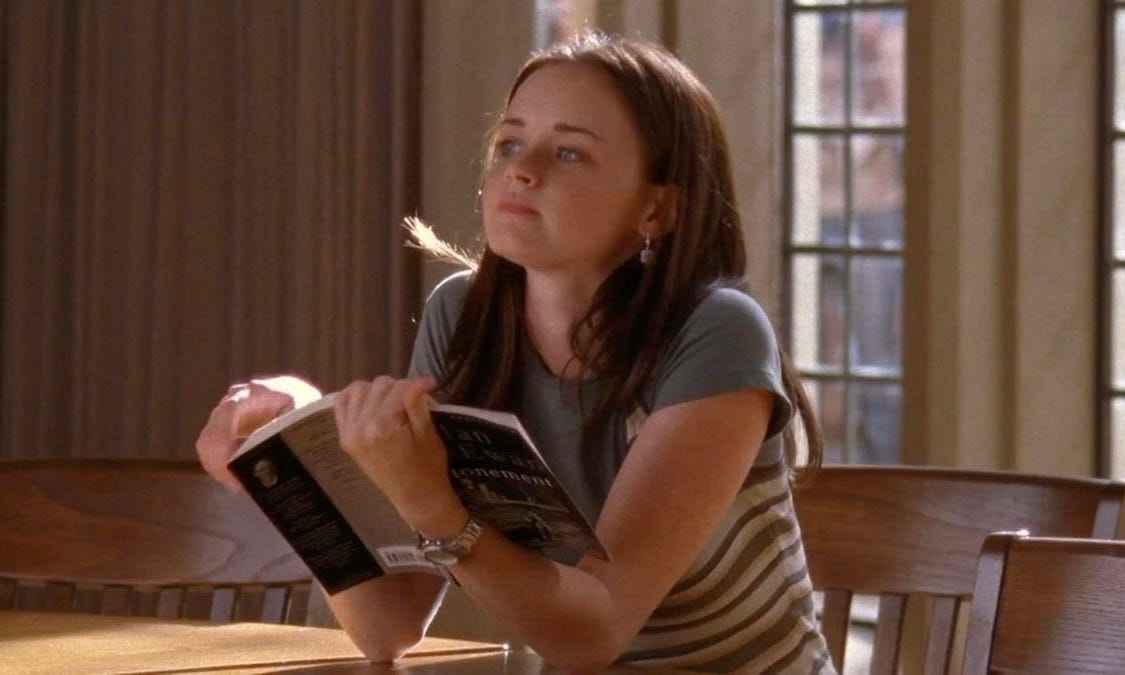
rory in gilmore girls (atonement by ian mcewan)
this novel starts with a misunderstanding shaped by imagination and interpretation, and then follows how that one moment ends up changing everything that comes after it. it’s really about perception, and how quickly what you think you’ve seen can turn into something irreversible once it’s believed or acted on.
rory often moves through the world in a very careful, observant way, trying to understand people and situations properly, and usually assuming that clarity is possible if you just pay enough attention. atonement kind of pushes against that idea. it shows how even thoughtful, intelligent perception can still miss something important, or quietly reshape it without meaning to. it’s less about being wrong in an obvious way and more about how easily certainty can form around something incomplete (and how hard it is to undo that once it’s set)
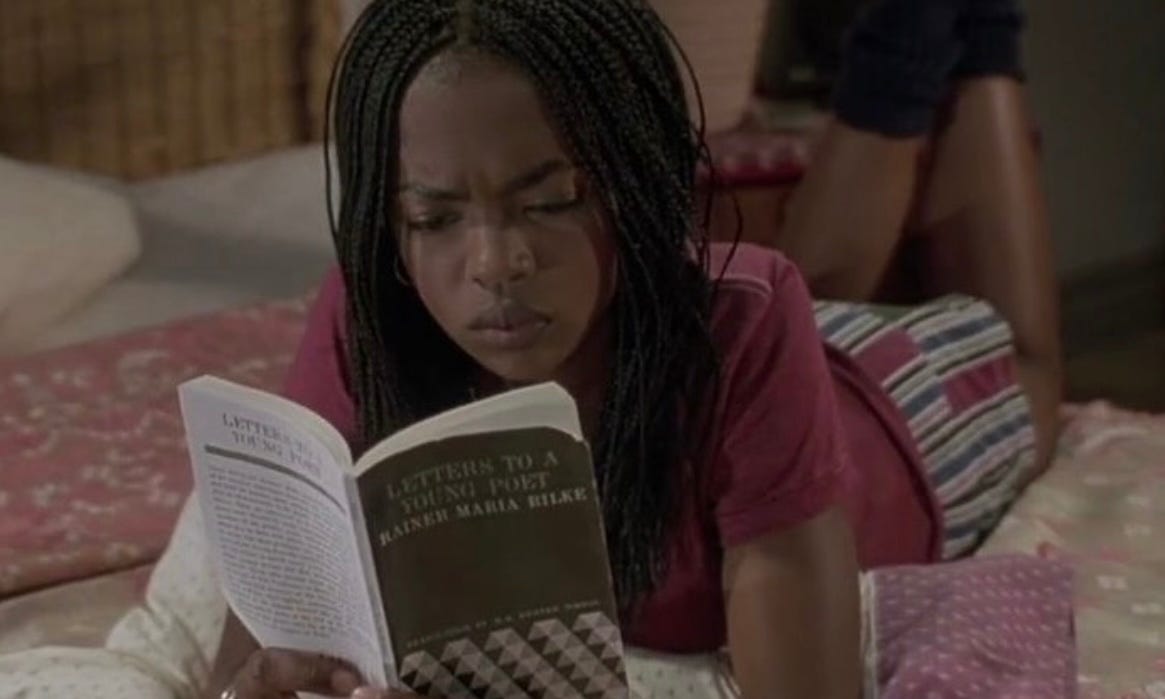
lauryn hill in sister act 2 (letters to a young poet by rainer maria rilke)
this is a collection of letters where rilke is basically telling a young writer to trust their own voice, and to create from honesty instead of needing approval or outside validation. it’s very reflective, and really focused on turning inward as a place to find creative direction.
in sister act 2, lauryn hill’s character is in that same kind of shift, going from holding back to actually letting her voice exist more fully. there’s a clear change from doubt to recognition, where expression stops being something she’s second guessing and becomes something she starts to trust. letters to a young poet sits right in that space, where creativity isn’t about proving anything, but about staying close to what already feels true inside (her voice doesn’t need permission, just space)
hanna marin in pretty little liars (along came a spider by james patterson)
this is a fast-paced thriller about investigation, manipulation, and trying to stay ahead of something that keeps escalating. it moves quickly, constantly shifting direction, and it’s built around tension more than any sense of stability.
hanna’s life in pretty little liars runs in a similar way. there’s always something changing the rules, forcing her to adapt in real time. along came a spider mirrors that same feeling of instability and urgency, where there’s not really space to pause, just the need to keep moving (always slightly behind -A, always trying to catch up)

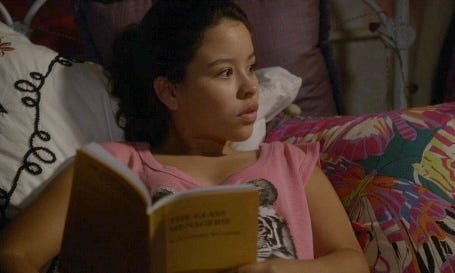
mariana foster in the fosters (the glass menagerie by tennessee williams)
this play is about memory, family, and that tension between staying loyal to the people you love and wanting to build a life outside of them. it moves through fragility, emotional dependence, and the way family can feel like home but also something you need space from.
mariana in the fosters sits in a very similar emotional place. she’s adopted, and even though she’s loved and secure, she still moves through moments of needing validation. so there’s this ongoing push and pull in her between wanting independence and still needing reassurance that she belongs. the glass menagerie mirrors that emotional structure really well: love that’s real and grounding, but also tender and fragile in a way that makes you hyper aware of loss (you’re safe, but you’re still checking)
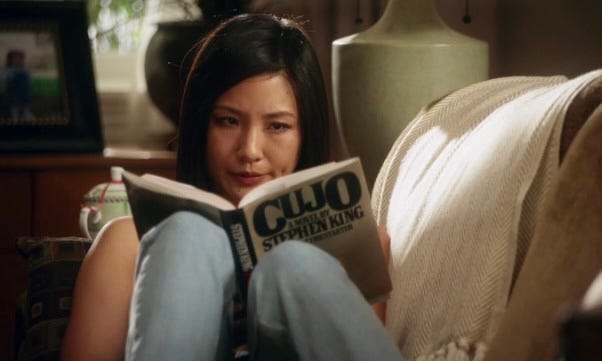
jessica huang in fresh off the boat (cujo by stephen king)
this novel starts from a pretty ordinary situation and slowly shifts into something more unstable and unpredictable, where tension builds through isolation and the feeling that things are starting to slip out of anyone’s control.
jessica is someone who tends to rely on order, structure, and having things under control in her environment. she’s practical, efficient, and usually trusts systems that feel predictable. cujo sits almost opposite to that instinct. it’s a story where control doesn’t really hold, even when everything begins in a normal, manageable place. the connection isn’t about personality overlap, but more about that underlying idea that stability can be a lot more fragile than it looks (and that things can change faster than your systems can keep up)
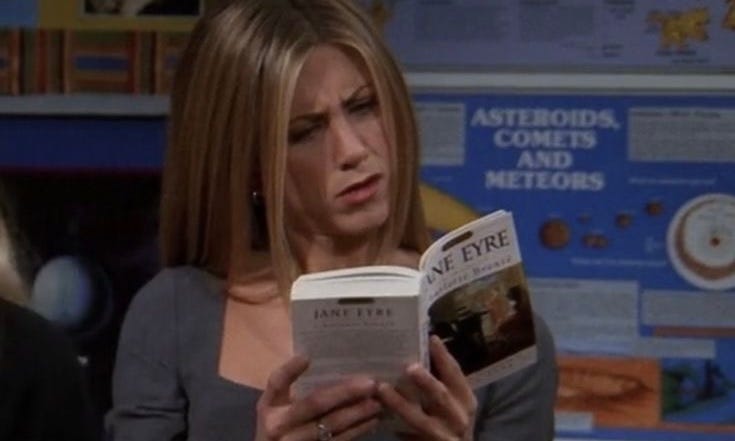
rachel in friends (jane eyre by charlotte brontë)
this novel follows jane as she moves through different stages of life trying to figure out independence, love, and self-respect, while constantly balancing what she feels with what she’s expected to accept. it’s very much about emotional intensity, moral clarity, and choosing yourself even when it makes things more complicated.
rachel in friends moves through things in a pretty similar emotional way. she’s very led by feeling (especially in relationships) and her decisions usually come from instinct more than overthinking it. there’s also this push and pull in her story between wanting closeness and wanting independence, like she’s always figuring out who she is in relation to other people. jane eyre kind of mirrors that internal back and forth, where love is strong, but never stronger than self-respect (she feels first, understands later)
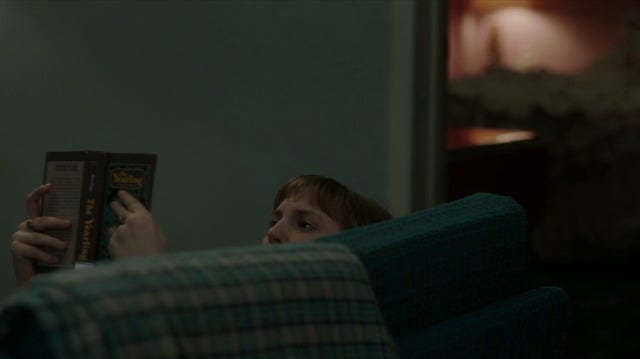
hannah horvath in girls (the yearling by marjorie kinnan rawlings)
this is a coming of age novel about growing up, attachment, and the painful process of learning that love often comes with loss. it follows a young boy and the bond he forms with an animal, and how that relationship becomes part of his understanding of responsibility, change, and letting go.
hannah in girls moves through things in a similar emotional space. she forms strong attachments to people, ideas, and versions of herself, and then really struggles when they shift or disappear. there’s this constant tension in her between wanting to hold on and being pushed into growth anyway, whether she’s ready or not. the yearling reflects that same experience of becoming an adult through loss and change, where letting go isn’t neat or resolved, but something that slowly shapes you over time (growing up without really being in control of the pace)
a lot of these details probably aren’t meant to be read into that deeply, but i like doing it anyway hehe ;) there’s something interesting about the things that don’t get highlighted on screen, but still end up shaping how you see someone. just through what they pick up, what they return to, what sits quietly in their world without being pointed at. it feels a bit more honest that way (or at least more revealing than anything that’s said out loud)
anyway… just something i love noticing and wanted to share :)
thank you for reading sexy souls <3
- clara